
Roller Derby 72: the club where you play freely, and the hits keep coming
In October, Roller Derby 72 opened the doors of its gym to us on a practice night. We came to talk values; we left with one conviction: this is first and foremost a sports club, where everyone plays freely, and where it's not just about shoving each other around.
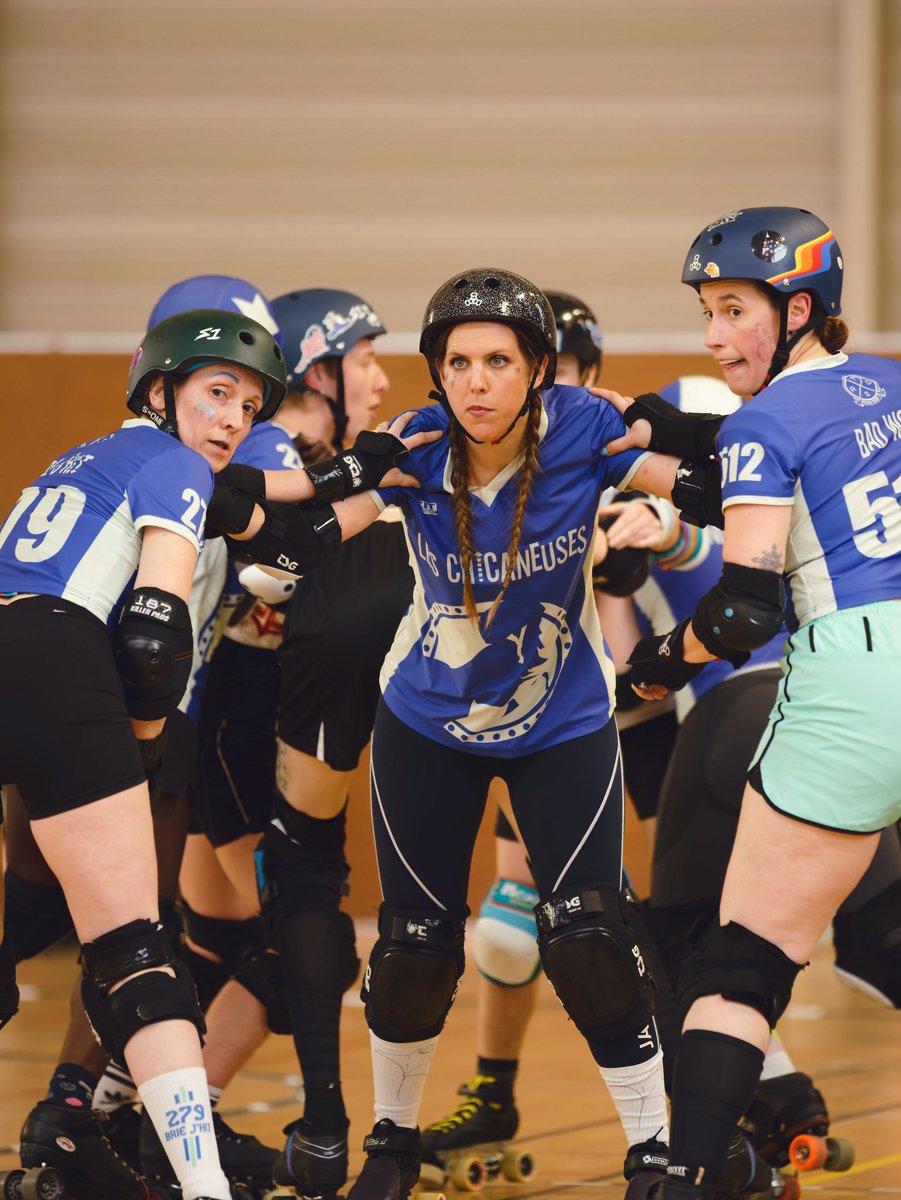
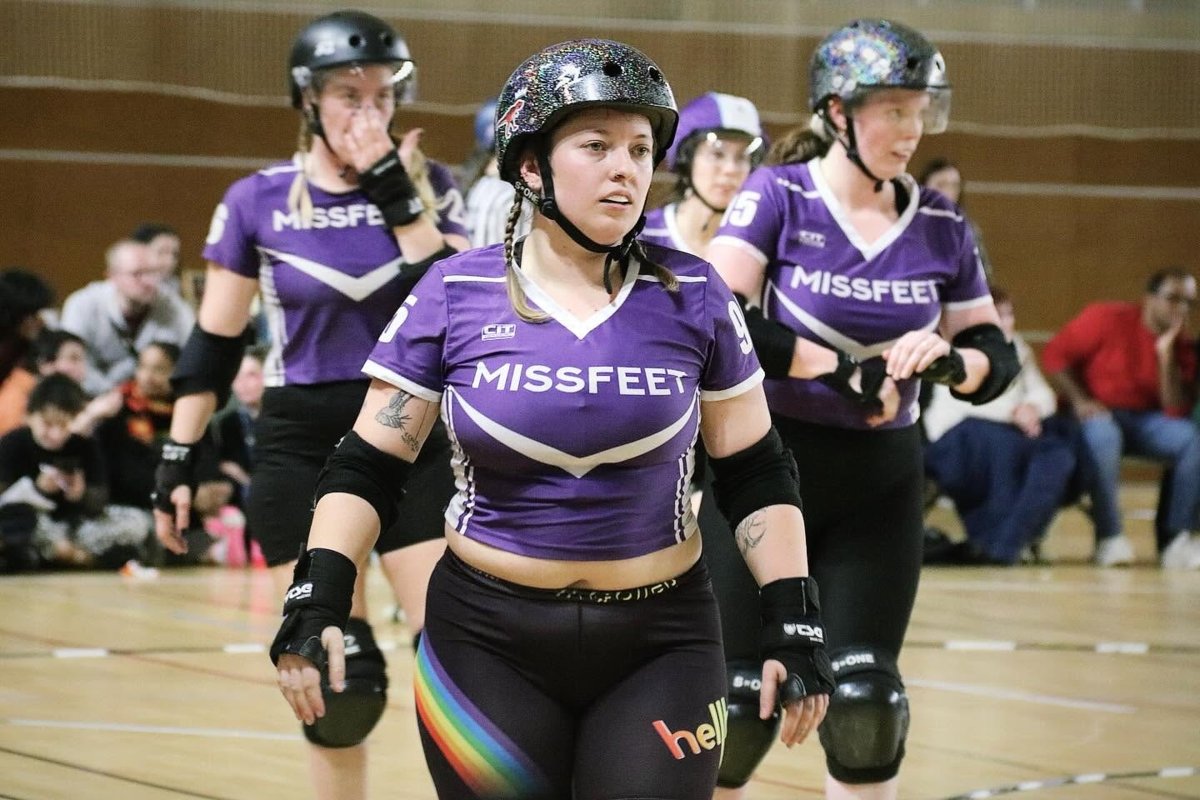
Photo : Roller Derby 72 (cliché Mimon Kalia) — Facebook
A quick note before we start: on a suggestion dropped during our visit, we tried inclusive writing for the first time in the French version of this article. Words that include everyone where possible, and an occasional middle dot (joueur·euses, débutant·es), as the club does on its own social media. We're beginners at this, like a recruit at her first practice: thanks in advance for your patience if we stumble.
A sports club first
We came to talk values, and we talked about them a lot. But the sentence that stuck with us is simpler: “We're here to play roller derby.” Roller Derby 72 is first and foremost a sports club, with its practices, its championship, its strategies and its bruises. The values serve a single idea: that everyone can play freely, with no sideways looks and no inappropriate remarks.
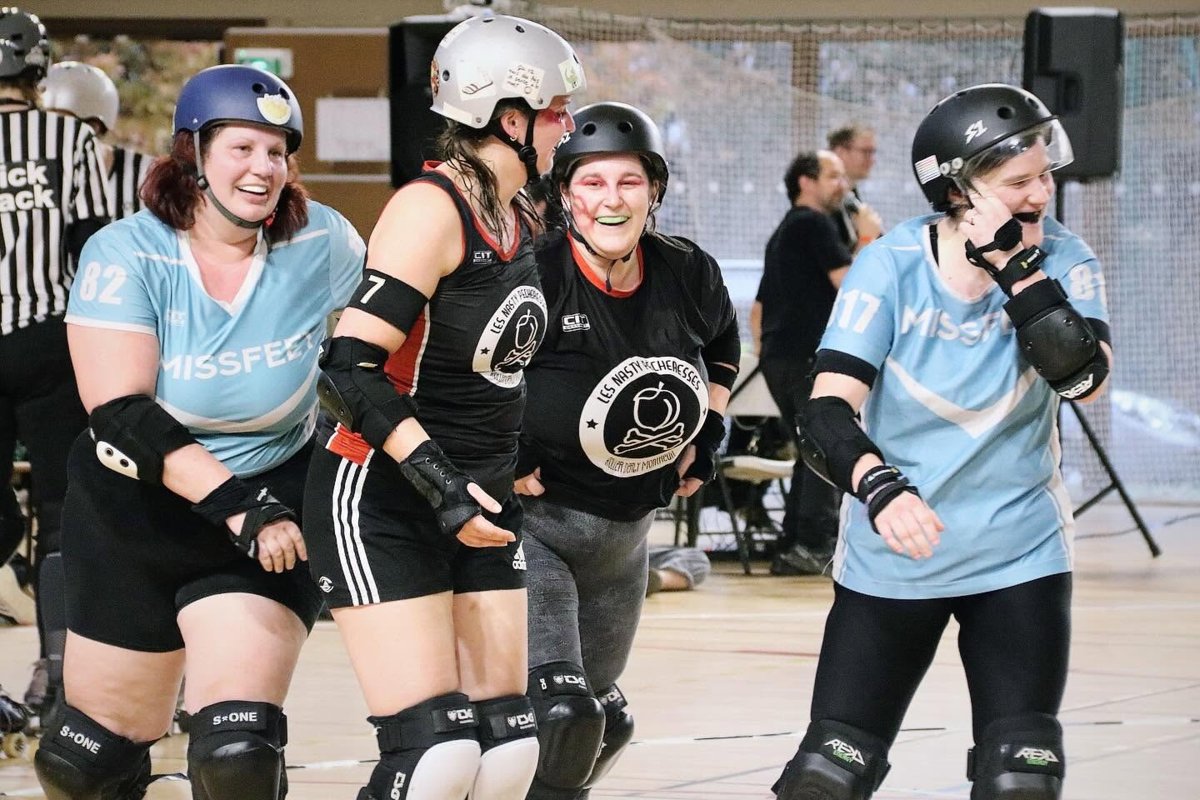
You only have to watch a practice to understand it: no two skaters look alike, and every body type finds a place on the track.
Three teams, from National 1 to recreational
The club, a nonprofit founded in Le Mans in 2011, runs several groups:
- the Missfeet, in National 1 F+, just below the top tier of the French championship, who secured their place in the division last spring;
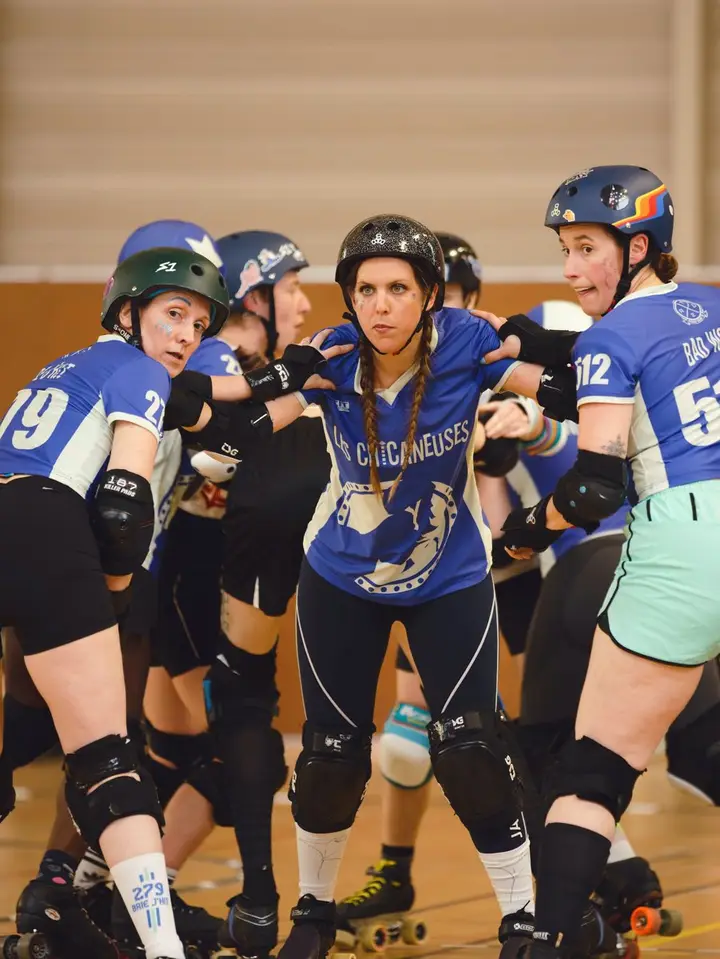
- the Chicaneuses, in National 3 F+, who are starting their second championship season after a first one last year;
- the Rillettes Chili Peppers, the recreational group, co-ed and open to all genders;
- the Rookies, the group for beginners.
The F+ category brings together, in the club's words, women and gender minorities.
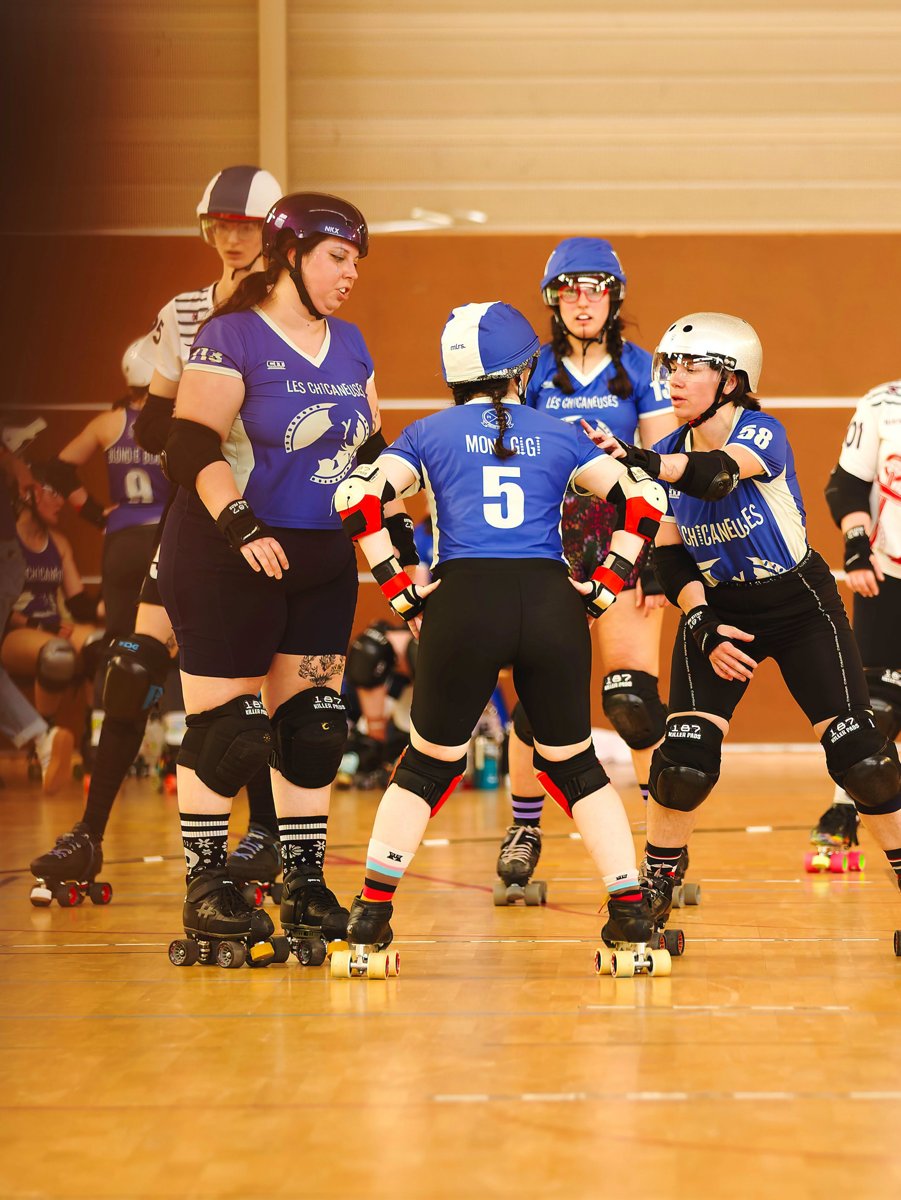
A championship season means two competition weekends per team, and a third if you make the playoffs. Travel is mostly in the west of France (Brest for the first leg this season), sometimes as far as Paris. The club also hosts two to three big events a year at home, championship legs or tournaments like Never Track Down and Sarthe & Furious, with pay-what-you-want admission: that's what pays for renting the gym, the equipment and the travel.
The hit: we thought they just shoved
Let's be honest: we pictured skaters bumping into each other a little in the turns. Wrong. LuCe, the Chicaneuses' coach, whom we met that evening, said it plainly: “we really do hit each other.” The move has a name, the hit (the rulebook calls it a block). You strike with the shoulder and hip to throw the opponent off balance, knock her down, or open a gap for your star: the person wearing a star on her helmet, the jammer, who scores the points.
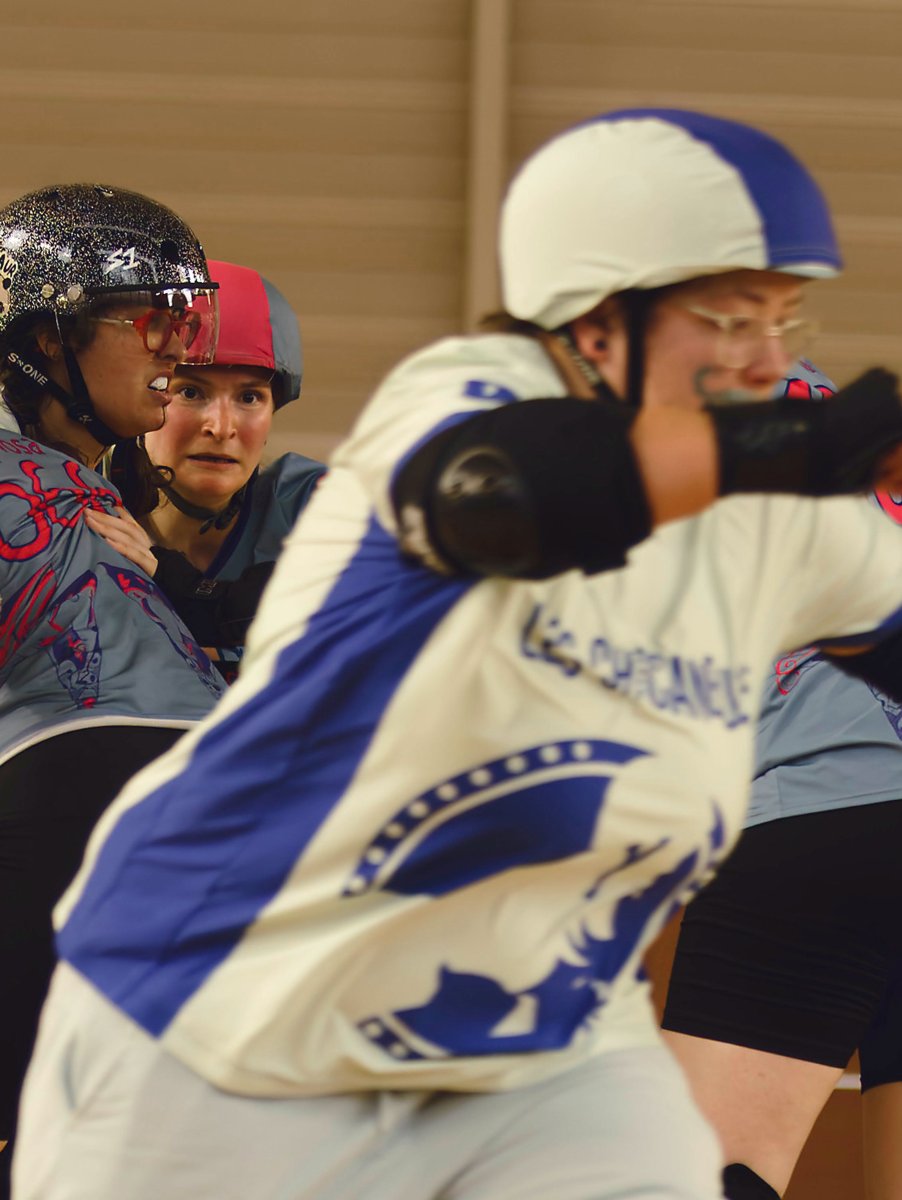
No tackling, and strict rules: you can't block with the forearm or the elbow, and you can't aim at the back, the head, or the legs below mid-thigh. Every foul sends you to the penalty box for 30 seconds, and all of them are called in English, a legacy of the sport's country of origin: a “forearm” for one forearm too many, a “cut” when you re-enter the track illegally. In France, a volunteer committee translates and adapts all these resources.
It's a team sport often compared to rugby: very tactical, very cardio, made of sprints and collisions. From the edge of the track, it's a true contact sport on wheels. You hit to create a path, never for the pleasure of smashing into someone, but you hit hard. No mercy.
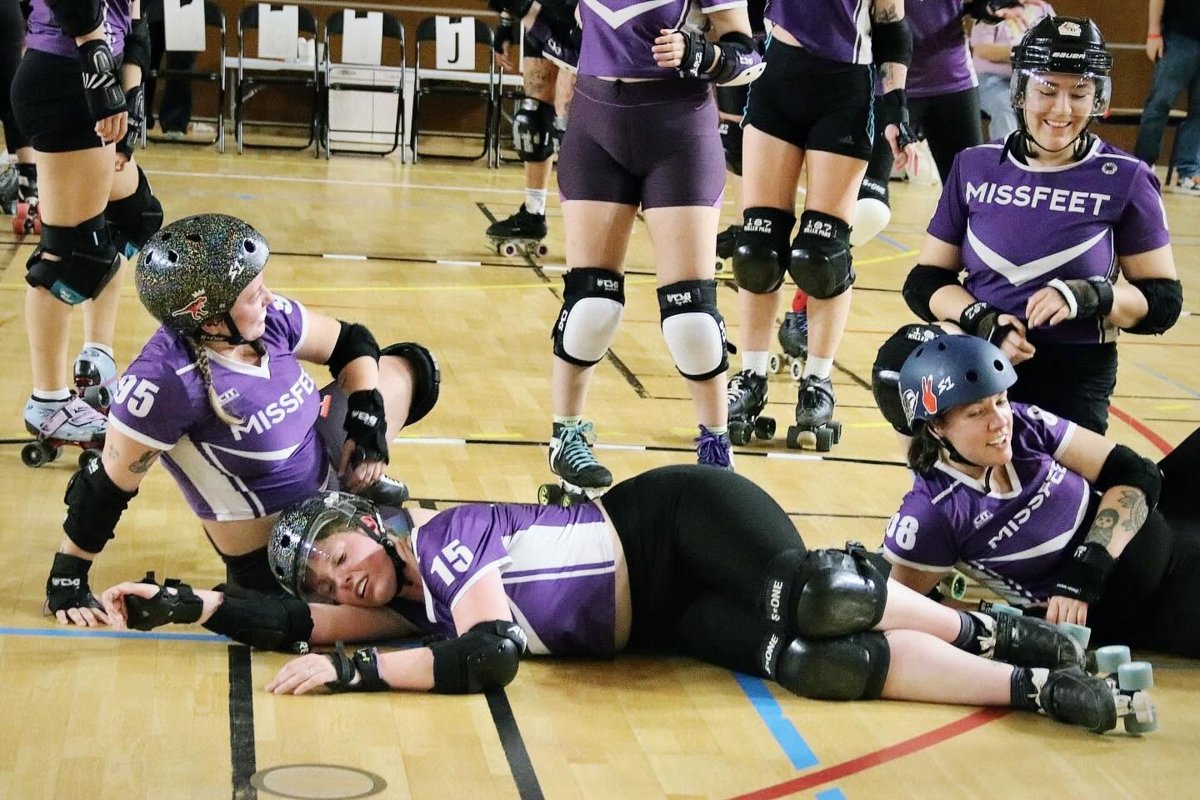
To take the hits, protection is mandatory: an approved helmet (a fixed visor is allowed for playing with glasses, never a cage), elbow pads, wrist guards, knee pads and a mouthguard. On the feet, quads: four-wheeled skates, two wheels in front, two behind, with an adjustable toe stop at the front.
Playing freely, with no looks and no remarks
Roller derby was born in the United States. A spectator sport in the 1930s, it fell out of fashion in the 1970s. In the early 2000s, in Austin, Texas, women revived it and made it a sport in its own right, with its leagues, rules and competition. There are two versions: the banked track, more spectacular, and the flat track, the one the club plays.
Inclusion is part of that heritage. The WFTDA (Women's Flat Track Derby Association), the major federation born of that revival, opened its teams to trans and intersex women in 2015. In February 2025, it clarified that it welcomes all marginalized-gender people: women, whether cis, trans or intersex, trans men and nonbinary people, with no proof required. In France, the Fédération française de roller et skateboard writes respect for gender self-determination into its rules and penalizes transphobia.
In Le Mans, all of this translates very concretely. This season, the club offers co-ed practices, open to all gender identities, and others that are by choice non-co-ed, open to all gender identities except cisgender men. An inclusion team makes sure these values are respected, with training and regular messages to members. At events, posters remind everyone of them and “safers” take reports, then go talk with the people involved. If talking isn't enough, whoever made the inappropriate remark is asked to leave.
Why so much care? Because some people deal with remarks every day and simply want a place to play sports safely. People newly arrived in Le Mans walked through the gym door for exactly that reason; they've been playing there for years. What's at stake comes down to a few words: being able to skate, fall, get back up and hit without wondering how you're being looked at.
Trust is earned on the track
Our guide for the evening, LuCe, is one of those people you don't forget: coach of the Chicaneuses, more than fifteen years of roller derby, and long experience with beginners. She has seen dozens of recruits arrive with no confidence, in their skates or in their bodies, then have a breakthrough during the year. To her players, she repeats: “You leave your day outside. In here, this is your time.”
She also talks about what the sport taught her: finishing an entire game after almost an hour of hits, having scored points, still standing on her skates at the end, and winning with her team. Enough to walk away with a “pretty impressive” level of self-confidence.
Starting out without ever having skated
No expertise needed. Some ease on wheels helps, but the club also supports people who have never put on skates. The first three things you learn: falling safely, getting around, stopping. “And after that, off you go.” On the track, one player who had never skated when she arrived now plays in competition.
Until December, the club holds trial sessions on certain Saturday mornings, at the Vauguyon gym, from 10 AM to 1 PM. Sign-up goes through a one-day license, so everyone is insured during the session. Equipment is lent; just come in sportswear with a water bottle. After that come the practices, split among the groups: Monday and Wednesday from 8 to 9:45 PM, and Saturday from 10 AM to 1 PM. They are for adults, and the detailed schedule is on the club's website; trials are open from age 17, with parental permission for minors.
Thank you
Thank you to Roller Derby 72 for opening the doors of its world to us: a world of freedom, where everyone finds their place… and where, on the track, things get seriously rough.
This club is well worth a visit: share this article with someone who wants to give it a try.
Getting there
- Trial sessions: Saturday, October 31 (co-ed), Saturday, November 21 (by choice non-co-ed), 10 AM–1 PM, Vauguyon gym, Le Mans.
- Practices: Monday and Wednesday 8–9:45 PM, Saturday 10 AM–1 PM, for adults (schedule on the club's website).
- Trials from age 17, equipment lent, one-day license.
- Sign-up: on the club's website, under “Sessions d'initiation.”
- Questions: recrutementrollerderby72@gmail.com
- Roller Derby 72 on Sortir au Mans
Go further
More news
 Behind the scenes News sortiraumans.fr
October 21, 2026 · Le Mans
Mélanie Schmidt-Ulmann and her Hildegard of Bingen notebook
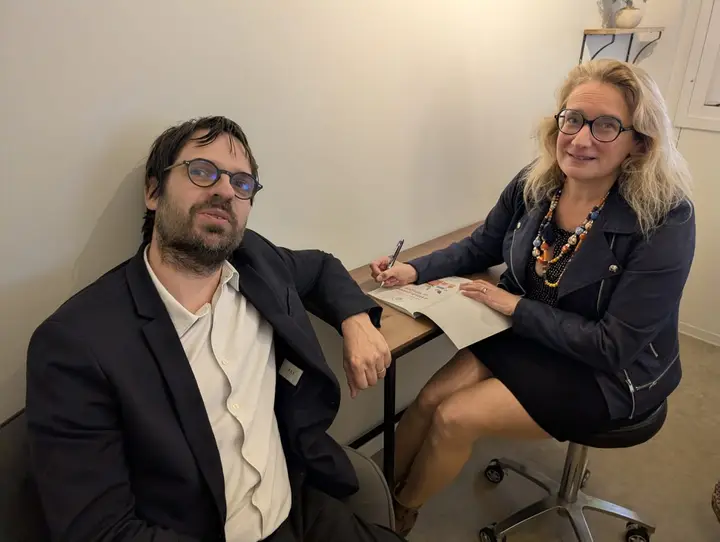
For once, it's neither a club we tested nor an organization we met, but a friend of the team. Mélanie Schmidt-Ulmann, a therapist in Le Mans, has written a notebook of remedies and recipes inspired by Hildegard of Bingen, and is signing copies in Le Mans on November 14 and 20.
 Meeting News sortiraumans.fr
October 16, 2026 · Yvré-l'Évêque
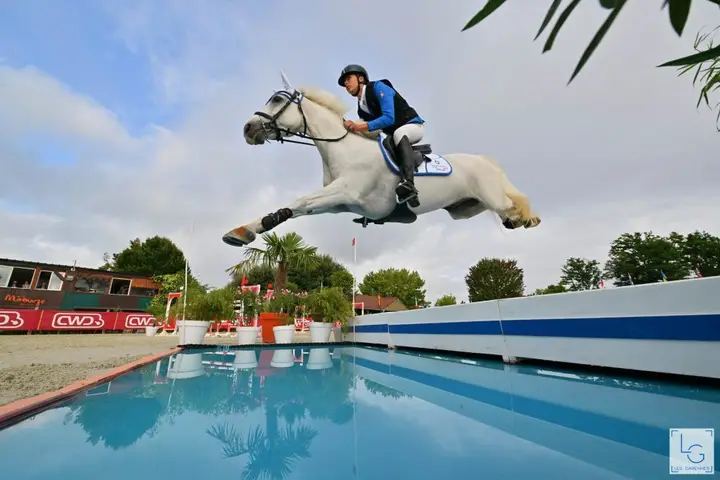
Pôle européen du cheval: 50 hectares of equestrian competitions on the edge of Le Mans, open to the public
In October, we pushed open the door of the Pôle européen du cheval in Yvré-l'Évêque. We expected a place reserved for riders; we found one of the largest equestrian sites in France, open to everyone, almost every weekend of the year.
 Meeting News sortiraumans.fr
October 13, 2026 · Yvré-l'Évêque
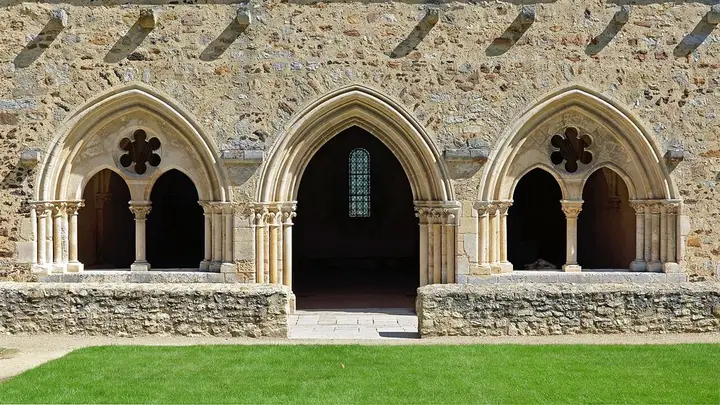
Abbaye Royale de l'Épau, a queen's abbey at the gates of Le Mans
In October, we met the team at the Abbaye Royale de l'Épau, in Yvré-l'Évêque. A Cistercian abbey founded in the 13th century by a queen of England, a park on the banks of the Huisne, and a program that makes plenty of room for families, starting with the All Saints' school holidays.