
Photo : GO69, CC BY-SA 4.0, via Wikimedia Commons
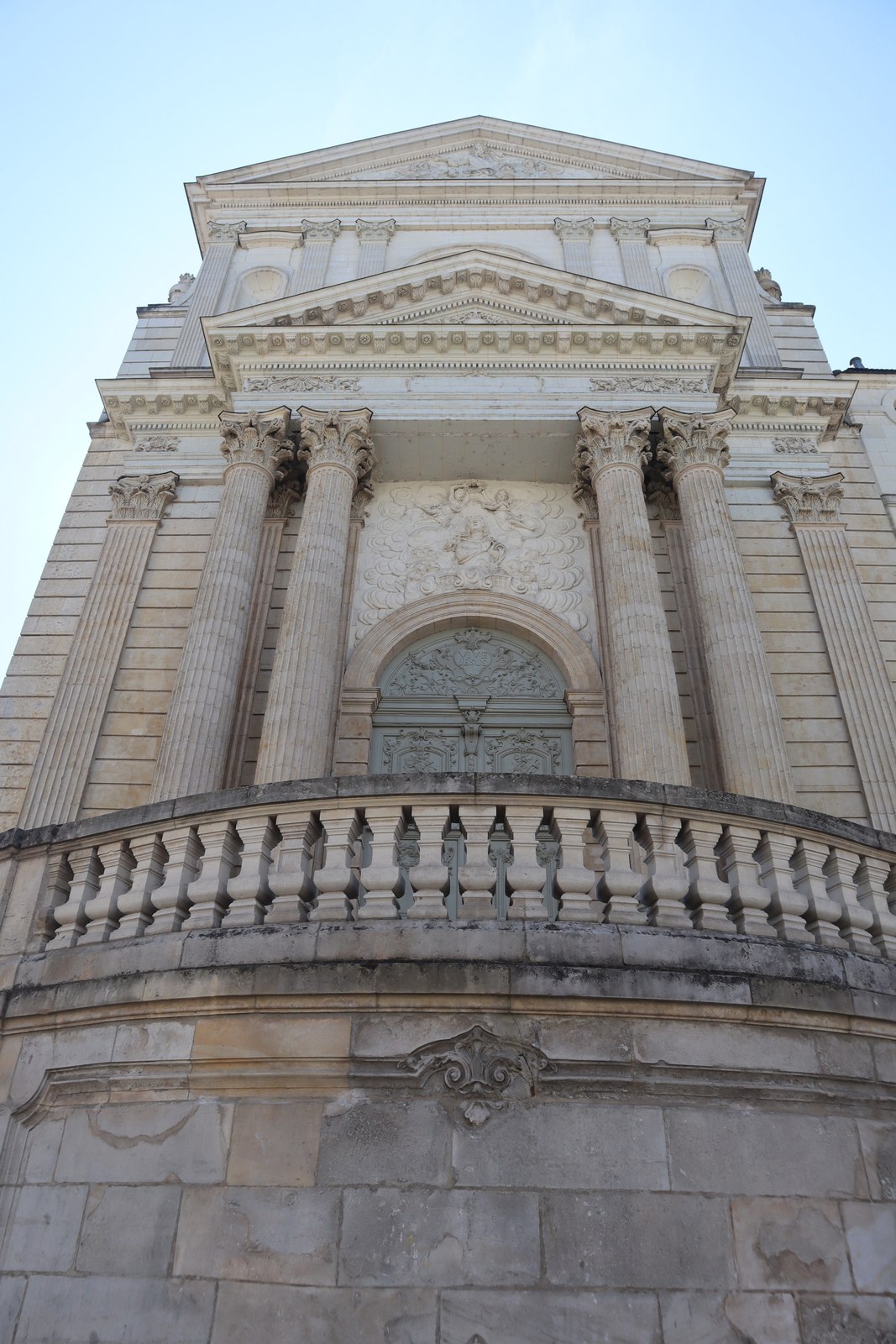
Chapelle de la Visitation
Régence-style chapel on Place de la République, notable for its cross plan and dominant dome.
What's on
Practical info
Hours
Open every day 10 AM–12 PM and 3–5 PM, depending on the availability of the volunteers who staff the welcome desk.
Tram
T1 — République stop, 30 m · wheelchair-accessible stop
Bus
Lines M, 6, 23, 25 — République stop, 30 m · wheelchair-accessible stop
Parking
Parking 60 m away: Parking de la République (paid, 830 spaces, underground)
Data: SETRAM / Le Mans Métropole (GTFS, Open Licence), © OpenStreetMap contributors (ODbL)
More about Chapelle de la Visitation
On Place de la République, in the heart of the Vieux Mans, the Chapel of the Visitation surprises with the richness of its interior, in contrast with its understated facade. This jewel of Régence architecture houses a vast central dome that floods two short transepts with light, decorated in a refined Louis XV style with gilding, stucco and woodwork characteristic of 18th-century religious art. Still a place of worship attached to the parish of Saint-Julien Cathedral, it can be visited freely during opening hours, staffed by volunteers.
Its small size and intimate atmosphere make it a popular stop on heritage walks in Le Mans, a short walk from the cathedral and the half-timbered lanes of the Cité Plantagenêt.
A bit of history
The chapel's story begins in 1632, when a donation of 20,000 livres was made to the nuns of the Congrégation de Sainte-Marie de la Visitation to found a convent in Le Mans. The following year the city agreed, and Bishop Charles de Beaumanoir de Lavardin gave his blessing. Built in just seven months, the complex proved fragile: by the middle of the 17th century the buildings were at risk of collapse, a fire damaged them in 1662, and the earthquake of October 6, 1711 further weakened the foundations. Reconstruction began in 1713–1714, and around 1730 Mother Superior Louise-Angélique de Balincourt entrusted Anne-Victoire Pillon with building the new church, consecrated on March 22, 1737.
During the Revolution, the nuns were expelled (1792) and the buildings became a prison, then a courthouse, before worship resumed there in 1804. In 1858, the building was handed over by the Sarthe department to the City of Le Mans, and it was restored between 1861 and 1865 by architect Denis Darcy. The chapel was listed as a historic monument on March 6, 1906, a listing supplemented by additional protection in 1987.