
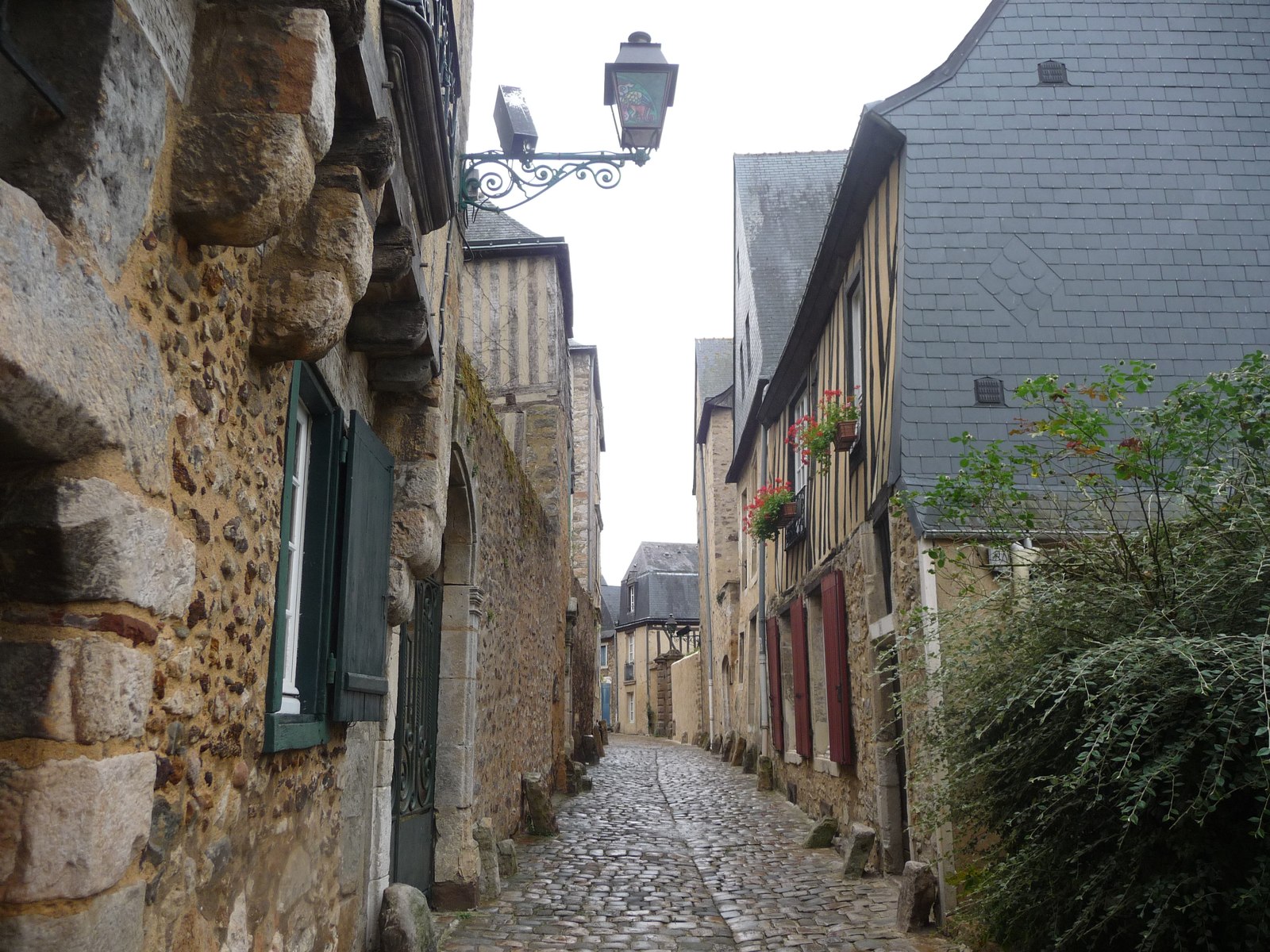
Photo : Martpan, CC BY-SA 4.0, via Wikimedia Commons
Cité Plantagenet
Historic quarter of old Le Mans, with cobbled lanes lined by medieval and Renaissance buildings. Includes the Gallo-Roman wall and the Saint-Julien cathedral.
- Where
- 1 place Saint-Michel, Le Mans
- Next event
- Friday, December 11 at 11:00 AM
Upcoming dates and time slots
Plan your visit
Getting there
Practical info
- Directions
Cité Plantagenet
1 place Saint-Michel, Le Mans
Hours: Free and open access at all times (no fixed hours). The Maison du Pilier-Rouge, the quarter's tourist welcome point, is open to the public every day in summer.
Tram: T2 — Jacobins-Quinconces stop, 140 m · wheelchair-accessible stop
Bus: Lines M, 8, 11 — Jacobins-Quinconces stop, 140 m · wheelchair-accessible stop
Parking: Parking 90 m away (paid, 5 spaces, surface lot)
Learn more
History
The Cité Plantagenêt is the historic heart of Le Mans: twenty hectares of cobbled, steep lanes lined with more than a hundred 15th- and 16th-century half-timbered houses and Renaissance mansions, all encircled by the exceptional Gallo-Roman wall. The quarter can be visited freely on foot, allowing 1.5 to 3 hours depending on your pace, following one of the ten routes offered by the Tourist Office. Le Mans holds the “Ville d'Art et d'Histoire” label, and the Cité Plantagenêt is among the sites that are candidates for UNESCO World Heritage listing.
The Maison du Pilier-Rouge, a tourist and heritage welcome point, is located here, as is the Jean-Claude Boulard museum - Carré Plantagenêt. The quarter also comes alive with events and occasional markets on its squares, especially in summer.
The name “Cité Plantagenêt” is actually recent: it dates from 2003. But the history of the place goes back much further, to 1128, when Geoffroy Plantagenêt married Mathilde l'Emperesse in the Saint-Julien cathedral of Le Mans. From this union, in 1133, in what is now the Hôtel de Ville (then the count's palace), their son Henri was born. He was baptized in the same cathedral and became king of England in 1154 as Henri II, founder of the Plantagenêt dynasty.
His wife, Aliénor d'Aquitaine, and their son Richard Cœur de Lion further enhanced the dynasty's influence. Bérengère de Navarre, Richard Cœur de Lion's wife, then lived in Le Mans for twenty-five years and founded the Abbaye Royale de l'Épau there in 1204. Today the quarter retains its medieval layout, protected by the Gallo-Roman wall built at the end of the 3rd or beginning of the 4th century, which allowed this ancient urban fabric to be preserved almost intact to this day.
Our weekly outings pick
Get "Ce week-end au Mans" by email on Thursdays. Once a week, no more. Our weekly newsletter is in French.
Your address is used only to send the newsletter. Unsubscribe in one click from any email.