

Photo : Selbymay, CC BY-SA 3.0, via Wikimedia Commons
Abbaye Royale de l'Épau
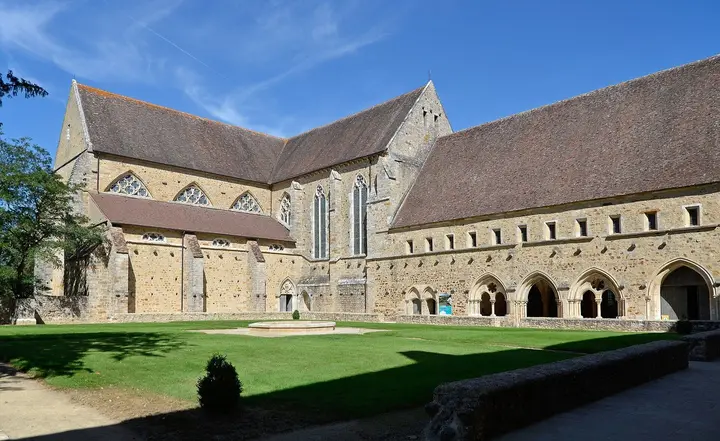
Cistercian abbey founded in 1230 by Bérengère de Navarre, widow of Richard Cœur de Lion, and considered one of the most beautiful Cistercian jewels in France. The estate includes the abbey church, the monastic buildings, and a wooded park on the banks of the Huisne.
The Sortir au Mans team met Abbaye Royale de l'Épau in October 2026. Read about the visit
What's on
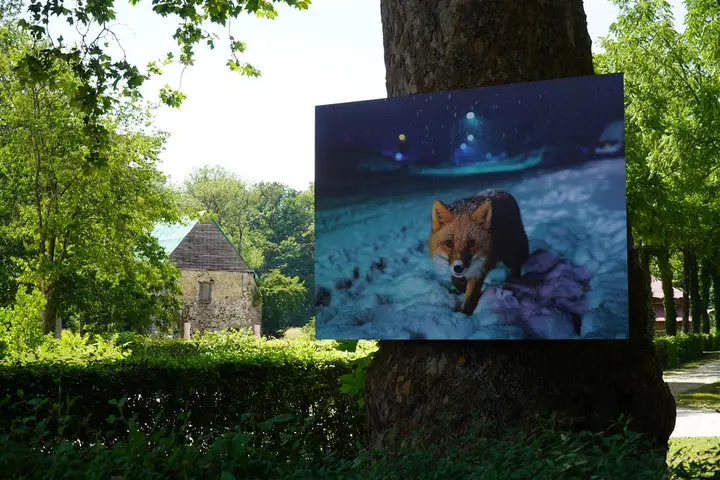
Photography at the Épau: Open-Air Photo Trail
with Corey Arnold, Paolo Verzone +3
Event
Jun 26 – Nov 1
Autumn Quest: The Beast of the Abbey
Workshop
Through Nov 1
ends in 6 days
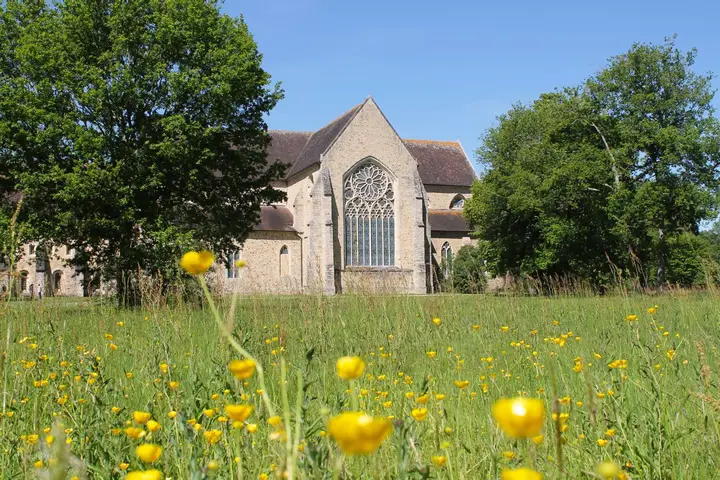
The Abbey's Mysteries
Tour
Through Dec 31
Guided tours of the Abbaye Royale de l’Épau (weekends)
Tour
Through Jun 27
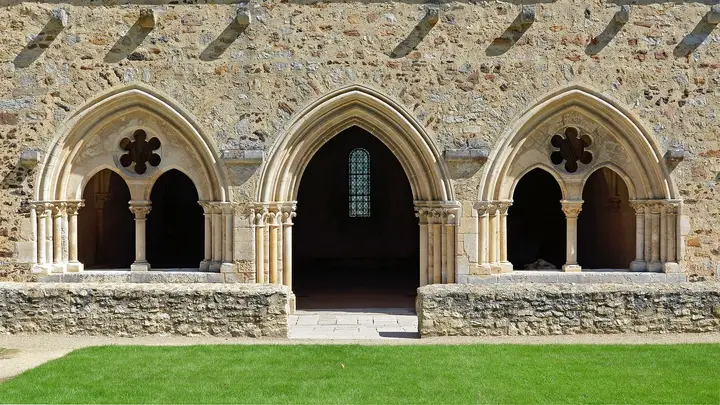
The Art of Jaspage: Ancient Bookbinding Workshop
Workshop
Tomorrow
3 PM – 4:30 PM
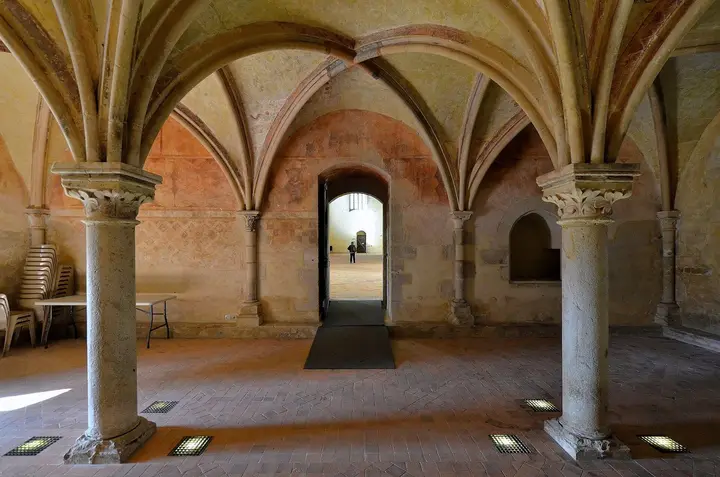
Talk: The Abbey’s Ancient Tapestries
Event· Free
Thu, Nov 12
7 PM – 8:30 PM

Candlelight: Tribute to Jean-Jacques Goldman
Event
Fri, Nov 13
7 PM

Candlelight: Coldplay vs. Imagine Dragons (November)
Event
Fri, Nov 13
9 PM
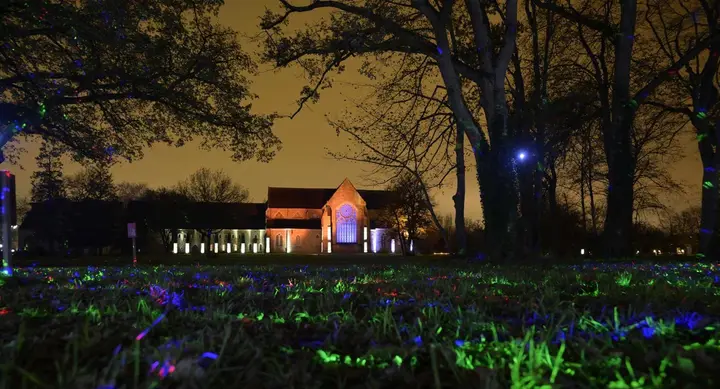
Light and Sound Journey
Event· Free
Nov 27 – Jan 3
Winter Quest
Workshop
Dec 19 – Jan 3
Christmas Workshops: Winter Wreath and Illuminated Greeting Card
Workshop
2 dates · Dec 23 and 30
3 PM
- Website — Abbaye Royale de l'Épau
- Facebook — Abbaye Royale de l'Épau
- Instagram — Abbaye Royale de l'Épau
Practical info
Hours
September 1 to June 30: Wednesday through Sunday, 11 AM–6 PM, and Mondays during school holidays. July 1 to August 31: every day except Tuesday, 10 AM–7 PM. Closed Tuesdays, December 25 and January 1. Last entries 30 minutes before closing.
Access
Route de Changé, in Yvré-l'Évêque, just outside Le Mans. By the A28 motorway: exit 23 “Le Mans Z.I. Sud,” follow “Le Mans Centre,” then “Abbaye de l'Épau.” Le Mans train station is 55 minutes from Paris by TGV.
Transit
Tram line 2, toward Espal - Arche de la Nature, Épau - Gué Bernisson stop (about 15 minutes from the SNCF train station), then a 5-minute walk. Bus line 6, toward Saint-Martin, Gué Bernisson stop.
Accessibility
Video guide in French Sign Language (LSF). FALC booklet (Easy to Read and Easy to Understand) available on request at the front desk. Audio tours on the Guidigo app.
Phone
02 43 84 22 29
More about Abbaye Royale de l'Épau
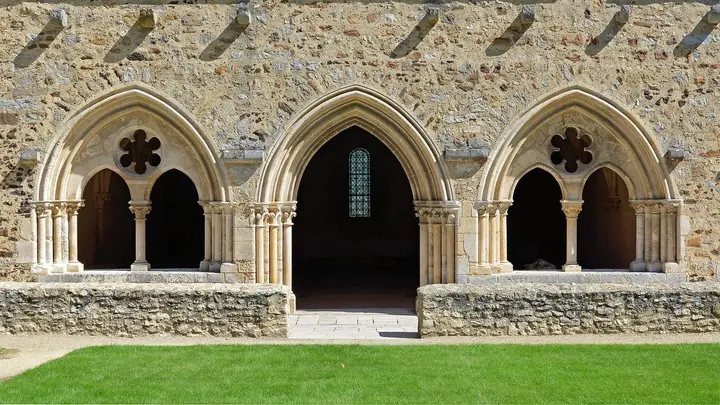
On the outskirts of Le Mans, in the commune of Yvré-l'Évêque, the Abbaye Royale de l'Épau is a former Cistercian monastery that has kept a remarkable medieval architectural unity. The abbey church, cloister, chapter house, scriptorium, warming room, and monks' dormitory can be visited along a heritage trail, complemented by a 17th-century wing. The estate also includes gardens being restored around a permaculture project, a heritage orchard, beehives, a café on site (Café des Moines), and a shop.
Managed since 2016 by Sarthe Culture on behalf of the Sarthe Department, the abbey hosts temporary exhibitions (photography, art), lectures, “Rendez-vous nature,” and activities for families and school groups all year, along with a summer program (“Un été à l'Épau”). Every May it becomes the setting for the Festival de l'Épau, a major classical music festival in the region, and at year's end it offers nighttime illuminations (“Le Voyage lumineux et sonore”). The abbey also hosts seminars and receptions in this exceptional heritage setting.
People come for the calm of the cloister, to read 13th-century Cistercian architecture, and for a cultural program that blends heritage, nature, and live performance, just a few minutes from central Le Mans.
A bit of history
L'Abbaye Royale de l'Épau was founded by Queen Berengaria of Navarre, widow of Richard the Lionheart, King of England. King Louis IX (Saint Louis) granted her the land in 1228. The founding charter of this Cistercian monastery for men is dated 1229, and an agreement settling a dispute with the Hôtel-Dieu de Coëffort was reached in 1230, the year twelve monks from Cîteaux, led by their abbot Jean, settled at l'Épau. Berengaria died in 1230, barely a year after the foundation, and was buried in the abbey she had founded. The church was consecrated by the bishop of Le Mans in 1234. Her recumbent effigy, now visible in the abbey church, remains one of the most moving witnesses to this history.
The monks drained the surrounding marshes and diverted the course of the Huisne to make room for construction, which progressed from south to north: church, sacristy, chapter house, dormitory and refectory, with Gothic embellishments added around 1260 to 1320. During the Hundred Years' War, the abbey was damaged in the 1360s (a fire in 1365 is traditionally cited, although recent historical work has nuanced this). In 1367, King Charles V authorized funding for the reconstruction using part of the ransom paid for the release of John II the Good. From 1479, King Louis XI imposed the commendam by appointing Thomas des Capitaines as the first commendatory abbot, breaking with the traditional monastic election and sparking conflicts, sometimes violent, such as under Abbot Macé Petiot in the 1490s.
During the Revolution, an inventory was drawn up on August 28, 1790, and the monks left in October of that year. The abbey, now national property, was sold to an industrialist who turned it into a laundry and then a farm, keeping it in agricultural use for more than a century and a half. On June 18, 1959, the Sarthe departmental council bought back the abbey for eleven million francs and launched a major restoration respectful of its 13th-century architecture. The Department has held its assemblies there since the 1970s, and in 1982, at the initiative of its president Michel d'Aillières, created the Festival de l'Épau, today one of France's major classical music events (42nd edition in May 2026). In March 2017, the site was officially renamed “Abbaye Royale de l'Épau” to highlight its royal character, brought to light by recent historical research. Since 2016, its cultural management has been entrusted to Sarthe Culture.
The full file
Visiter l'abbaye
L'abbaye se visite librement aux heures d'ouverture : église abbatiale avec le gisant de la reine Bérengère, cloître, salle du chapitre, scriptorium, chauffoir et dortoir des moines, puis le parc au bord de l'Huisne, les jardins et le verger. Un livret de visite est remis à l'accueil et des panneaux explicatifs accompagnent les salles. Le site est classé monument historique depuis 1973.
De septembre à juin, l'équipe de médiation propose une visite guidée chaque samedi et dimanche, à 11 h et à 16 h, consacrée à l'histoire de l'abbaye, à la vie des moines et à sa fondatrice, Bérengère de Navarre. Réservation obligatoire, départ à partir de 3 personnes.
Les mystères de l'abbaye
Nouveauté 2026 : une enquête à mener en équipe dans les salles de l'abbaye. Le corps de la reine Bérengère a disparu pendant la guerre de Cent Ans ; énigmes, symboles et indices permettent de remonter sa trace. Dès 12 ans, à 2 ou 3 joueurs minimum, compter 1 h à 1 h 30. Le kit de jeu se récupère à l'accueil, sans supplément au droit d'entrée.
En famille
L'abbaye a signé en 2020 la charte Môm'Art, qui engage les lieux de patrimoine à bien accueillir les enfants. Deux livrets-jeux gratuits permettent d'explorer le site en autonomie, l'un pour les 3-6 ans, l'autre pour les 7-12 ans, et une enquête numérique jeune public se joue sur l'application Guidigo.
À chaque vacances scolaires, l'abbaye propose une quête à mener en autonomie et des ateliers créatifs le mercredi après-midi, sur réservation, avec un adulte accompagnateur. On peut prolonger par un goûter au Café des Moines.
Le jardin permacole
Depuis 2017, le parc est réaménagé autour d'un jardin en permaculture. Ruches, mare, forêt nourricière, serre et poulailler y ont pris place, et le tracé du jardin reprend celui de la grande verrière de l'église abbatiale. Une rosace végétale invite à la détente, et la promenade se prolonge le long des douves. Au printemps et à l'automne, des ateliers au jardin sont proposés aux adultes.
Le Café des Moines et la boutique
Au cœur de l'abbaye, le Café des Moines a une terrasse avec vue sur le parc. Chaque semaine, le chef compose un menu de saison avec des produits cultivés en grande partie dans le jardin permacole. Ouvert du mercredi au dimanche, de 12 h à 18 h ; le midi, sur réservation uniquement (02 43 54 74 91, cafedesmoines@sarthe.fr), salon de thé l'après-midi.
La boutique propose plus de 500 références : ouvrages spécialisés, produits monastiques, spécialités du terroir, un coin des créateurs et une collection Reine Bérengère. On y trouve aussi les produits du jardin : conserves, tisanes et une liqueur aux plantes aromatiques.
L'automne et l'hiver à l'Épau
Pendant les vacances de la Toussaint : la quête d'automne, un atelier de décoration de citrouilles et un atelier de jaspage, technique de reliure ancienne. Le jeudi 12 novembre, une conférence présente les tapisseries anciennes conservées à l'abbaye. Du 27 novembre au 3 janvier, le Voyage lumineux et sonore illumine le parc à la tombée de la nuit, en accès gratuit. Pendant les vacances de Noël : quête d'hiver, atelier couronne d'hiver et atelier carte de vœux enluminée.
Réserver
Ateliers, quêtes et visites guidées se réservent à l'accueil : 02 43 84 22 29 ou epau.accueil@sarthe.fr. Places limitées.
Sources
- Site de l'Abbaye Royale de l'Épau — accessed 2026-10-12
- Nos offres pour la famille — accessed 2026-10-12
- Animations culturelles et patrimoniales — accessed 2026-10-12
- Conférences — accessed 2026-10-12
- Programme 2026 de l'abbaye (brochure distribuée à l'accueil) — accessed 2026-10-12